The microprocessor market plays a foundational role in the global digital economy, acting as the computational core of modern electronic systems. Microprocessors are integral to a wide range of applications, including personal computers, smartphones, data centers, automotive electronics, industrial automation systems, and emerging technologies such as artificial intelligence (AI) and the Internet of Things (IoT). As digital transformation accelerates across industries, demand for faster, smaller, and more energy-efficient processing units continues to rise, reinforcing the strategic importance of the microprocessor market worldwide.
Microprocessor Market Size and Growth Outlook
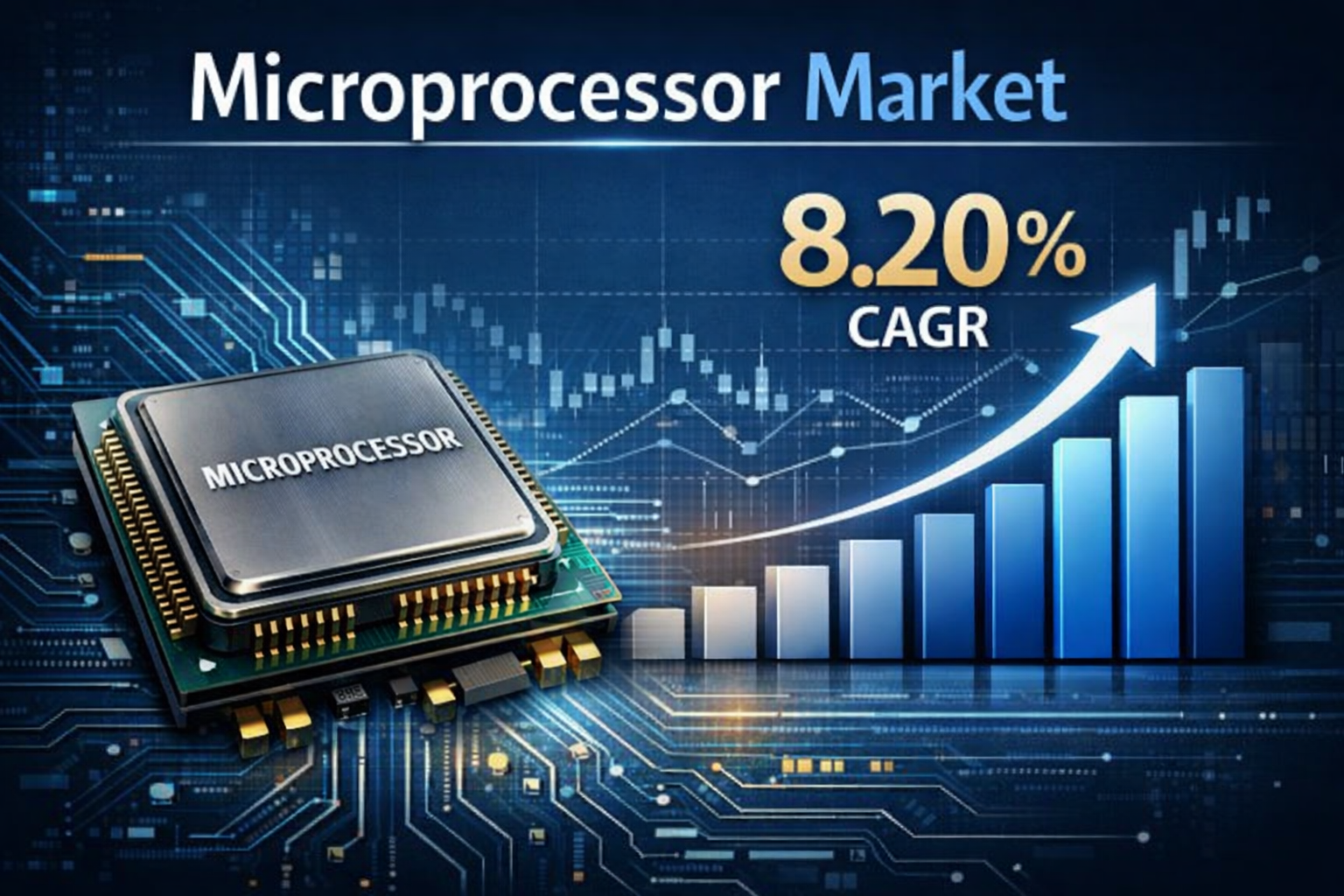
According to the SNS Insider, the Microprocessor Market demonstrated robust growth momentum in recent years. In 2023, the market was valued at USD 62.67 billion and is projected to expand steadily, reaching approximately USD 126.91 billion by 2032. This growth reflects a compound annual growth rate (CAGR) of 8.20% during the forecast period from 2024 to 2032. The upward trajectory is driven by rising adoption of advanced computing devices, continuous semiconductor innovation, and increasing integration of microprocessors across both consumer and industrial applications.
Microprocessor Market Drivers Supporting Expansion
Several structural drivers are contributing to sustained growth in the microprocessor market. One of the most significant factors is the rapid expansion of cloud computing and hyperscale data centers, which require high-performance processors to manage massive data workloads efficiently. Additionally, the proliferation of smart devices, including wearables, smart home systems, and connected appliances, is generating consistent demand for low-power and high-efficiency microprocessors.
The automotive sector is another major growth catalyst, with modern vehicles increasingly relying on microprocessors for advanced driver-assistance systems (ADAS), infotainment, battery management, and autonomous driving technologies. Moreover, the rise of AI and machine learning workloads has intensified demand for specialized and high-performance processors optimized for parallel computing and real-time data processing.
Microprocessor Market Challenges and Competitive Pressures
Despite strong growth prospects, the microprocessor market faces several challenges that could impact its expansion trajectory. High capital investment requirements for semiconductor fabrication facilities remain a major barrier, particularly as manufacturers transition to smaller process nodes. Supply chain disruptions, geopolitical tensions, and trade restrictions have also highlighted vulnerabilities in the global semiconductor ecosystem.
In addition, intense competition among leading players has led to pricing pressures and rapid product life cycles. Companies must continuously invest in research and development to remain competitive, which can strain profitability, especially for smaller or emerging manufacturers. Managing thermal performance, power efficiency, and design complexity further adds to the technical challenges faced by market participants.
Microprocessor Market Opportunities in Emerging Technologies
The microprocessor market is well-positioned to benefit from multiple high-growth opportunities over the forecast period. Edge computing is gaining traction as industries seek to process data closer to the source, creating demand for compact, energy-efficient processors with enhanced computing capabilities. Similarly, the expansion of 5G networks is enabling new use cases in real-time analytics, autonomous systems, and immersive technologies, all of which rely heavily on advanced microprocessors.
Another significant opportunity lies in customized and application-specific processors. As workloads become more specialized, companies are increasingly investing in domain-specific architectures to optimize performance and power consumption. This trend is particularly evident in AI accelerators, industrial automation systems, and healthcare devices, opening new revenue streams within the broader microprocessor market.
Microprocessor Market Segmentation Insights
The microprocessor market can be segmented based on architecture, application, and end-user industry. From an architectural perspective, x86, ARM, and RISC-V processors dominate the landscape, each serving distinct performance and efficiency requirements. In terms of applications, consumer electronics account for a substantial share, followed by IT and telecommunications, automotive, industrial, and healthcare sectors.
End-user demand is increasingly shifting toward high-performance and energy-efficient solutions, particularly in enterprise and industrial environments. This segmentation diversity allows manufacturers to tailor their product portfolios to specific use cases, strengthening their market positioning and long-term growth potential.
Microprocessor Market Regional Analysis and Growth Trends
Regionally, the microprocessor market is led by Asia Pacific, driven by strong semiconductor manufacturing capabilities, high consumer electronics production, and growing investments in advanced technologies. Countries such as China, Taiwan, South Korea, and Japan play a critical role in both manufacturing and consumption.
North America represents another key market, supported by robust demand from data centers, cloud service providers, and technology innovators. Europe is witnessing steady growth due to rising adoption of automation and automotive electronics, while emerging markets in Latin America and the Middle East & Africa are gradually increasing their share as digital infrastructure expands.
Microprocessor Market Future Outlook
Looking ahead, the microprocessor market is expected to remain on a strong growth path, supported by continuous innovation and expanding application areas. Advancements in chip design, packaging technologies, and manufacturing processes will enable higher performance and energy efficiency. Strategic collaborations, government support for domestic semiconductor production, and increased focus on supply chain resilience are also likely to shape the market’s future landscape.
As digitalization deepens across industries, microprocessors will continue to serve as the backbone of modern technology, ensuring long-term relevance and sustained market expansion through 2032 and beyond.
FAQs
Q1. What is the CAGR of the microprocessor market during the forecast period?
The microprocessor market is expected to grow at a compound annual growth rate (CAGR) of 8.20% from 2024 to 2032, driven by rising demand across computing, automotive, and industrial applications.
Q2. What is the forecasted market size of the microprocessor market by 2032?
By 2032, the microprocessor market is projected to reach approximately USD 126.91 billion, reflecting strong adoption of advanced processors across multiple end-use industries.
Q3. Which region is expected to dominate the microprocessor market growth?
Asia Pacific is anticipated to dominate the microprocessor market due to its strong semiconductor manufacturing base, high electronics production, and increasing investments in advanced computing technologies.