
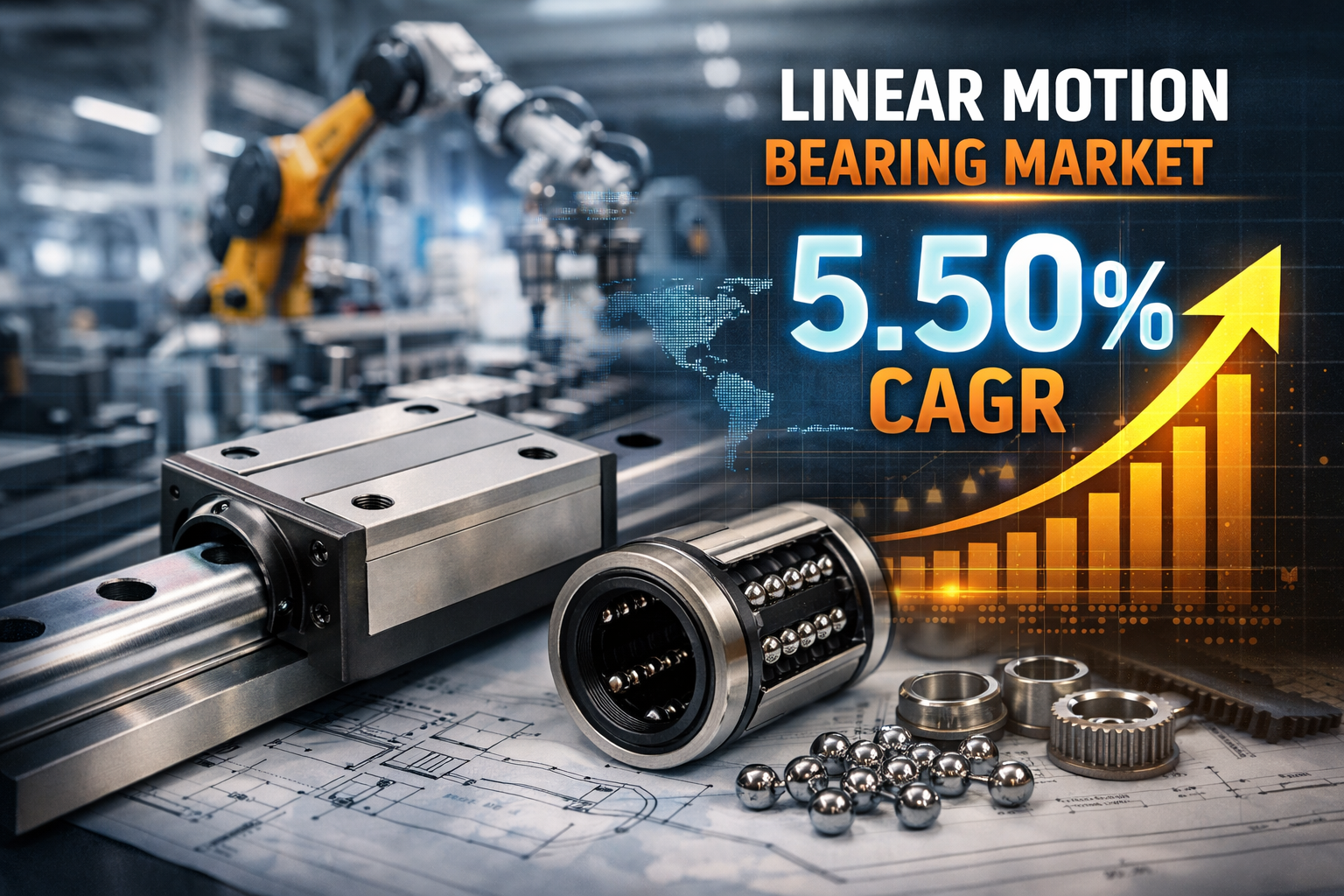
The Linear Motion Bearing Market plays a critical role in modern industrial systems by enabling smooth, precise, and low-friction linear movement across a wide range of applications. These bearings are essential components in machinery used in manufacturing automation, robotics, packaging equipment, semiconductor fabrication, and medical devices. As industries increasingly prioritize precision engineering, energy efficiency, and reduced mechanical wear, demand for advanced linear motion bearing solutions continues to grow steadily across global markets.
Linear Motion Bearing Market Size and Growth Outlook
According to the SNS Insider, The Linear Motion Bearing Market demonstrated strong momentum in recent years, driven by expanding industrialization and automation worldwide. In 2023, the market generated revenues of USD 7.14 billion and is anticipated to climb to USD 11.52 billion by 2032, progressing at a compound annual growth rate (CAGR) of 5.50% during the forecast period from 2024 to 2032. This consistent growth reflects rising investments in smart factories, CNC machinery, and high-precision production systems across both developed and emerging economies.
Key Drivers Fueling the Linear Motion Bearing Market
One of the primary drivers of the Linear Motion Bearing Market is the rapid adoption of industrial automation and robotics. Manufacturers are increasingly replacing traditional mechanical systems with automated solutions to enhance productivity, accuracy, and operational efficiency. Linear motion bearings support these systems by offering precise guidance and reduced friction, enabling faster and more reliable machine movements. Additionally, the growing use of electric actuators and linear guides in assembly lines further strengthens market demand.
Expanding Applications Across End-Use Industries
The Linear Motion Bearing Market benefits from diverse applications across multiple industries. In the automotive sector, these bearings are widely used in automated welding systems, material handling equipment, and inspection lines. The electronics and semiconductor industries rely on linear motion bearings for ultra-precise positioning in chip manufacturing and PCB assembly. Meanwhile, the medical equipment industry uses these components in diagnostic imaging machines, surgical robots, and laboratory automation systems, where accuracy and reliability are critical.
Technological Advancements in the Linear Motion Bearing Market
Continuous innovation is reshaping the Linear Motion Bearing Market, with manufacturers focusing on advanced materials, compact designs, and higher load capacities. Developments such as self-lubricating bearings, corrosion-resistant coatings, and low-noise designs are improving product lifespan and performance. Integration of sensor-based monitoring systems is also gaining traction, allowing predictive maintenance and reducing downtime in industrial operations. These technological improvements are making linear motion bearings more adaptable to demanding environments.
Linear Motion Bearing Market Segmentation Insights
The Linear Motion Bearing Market is segmented by product type, application, and end-use industry. By product type, ball bearings hold a significant share due to their high efficiency and widespread use in industrial machinery. Roller bearings are gaining popularity in heavy-load applications where durability is essential. By application, automation and robotics account for a major portion of market revenue, followed by machine tools and material handling systems. This segmentation highlights the market’s versatility and broad industrial relevance.
Regional Analysis of the Linear Motion Bearing Market
Regionally, Asia-Pacific dominates the Linear Motion Bearing Market, supported by rapid industrial growth in China, Japan, South Korea, and India. The presence of major manufacturing hubs, expanding automotive production, and increasing investments in automation technologies drive regional demand. North America represents a mature market with steady growth, fueled by advanced manufacturing practices and strong adoption of robotics. Europe continues to experience stable expansion, supported by precision engineering industries and stringent quality standards across manufacturing sectors.
Competitive Landscape in the Linear Motion Bearing Market
The Linear Motion Bearing Market is moderately competitive, with global and regional players focusing on product innovation, strategic partnerships, and geographic expansion. Leading manufacturers invest heavily in research and development to introduce high-performance bearings tailored to specific industrial applications. Customization, quality assurance, and after-sales support have become key differentiators as customers seek long-term reliability and cost efficiency from bearing suppliers.
Challenges and Constraints Impacting the Linear Motion Bearing Market
Despite positive growth prospects, the Linear Motion Bearing Market faces certain challenges. Fluctuating raw material prices, particularly steel and specialty alloys, can impact manufacturing costs and profit margins. Additionally, improper installation and maintenance practices may lead to premature bearing failure, affecting end-user confidence. However, increased awareness, technical training, and the availability of advanced monitoring solutions are gradually addressing these concerns.
Future Opportunities in the Linear Motion Bearing Market
Looking ahead, the Linear Motion Bearing Market is poised to benefit from the rise of Industry 4.0 and smart manufacturing ecosystems. Increasing demand for compact, energy-efficient, and high-precision components in automated systems presents significant growth opportunities. Emerging applications in renewable energy equipment, 3D printing systems, and collaborative robots are expected to further expand the market’s scope over the forecast period.
Conclusion: Long-Term Outlook of the Linear Motion Bearing Market
The Linear Motion Bearing Market is set for sustained growth through 2032, supported by industrial automation, technological advancements, and expanding applications across diverse sectors. With a projected market size of USD 11.52 billion and a CAGR of 5.50%, the market offers attractive opportunities for manufacturers, suppliers, and investors alike. As industries continue to modernize and prioritize efficiency and precision, linear motion bearings will remain indispensable components in the global manufacturing landscape.
FAQs on the Linear Motion Bearing Market
Q1. What is the CAGR of the Linear Motion Bearing Market during the forecast period?
The Linear Motion Bearing Market is expected to grow at a CAGR of 5.50% from 2024 to 2032, driven by automation and industrial expansion.
Q2. What is the forecasted market size of the Linear Motion Bearing Market by 2032?
By 2032, the Linear Motion Bearing Market is projected to reach a valuation of USD 11.52 billion, up from USD 7.14 billion in 2023.
Q3. Which region is expected to witness the fastest growth in the Linear Motion Bearing Market?
Asia-Pacific is anticipated to experience the fastest growth due to rapid industrialization, strong manufacturing activity, and increasing adoption of automation technologies.